

Mythic Echoes and the Sacred Grammar of Landscape
SECTION I: THE ECHO OF THE MYTH
“There are places where the wind seems to remember something. A whisper. A story too old to be told aloud. I photograph to listen.”
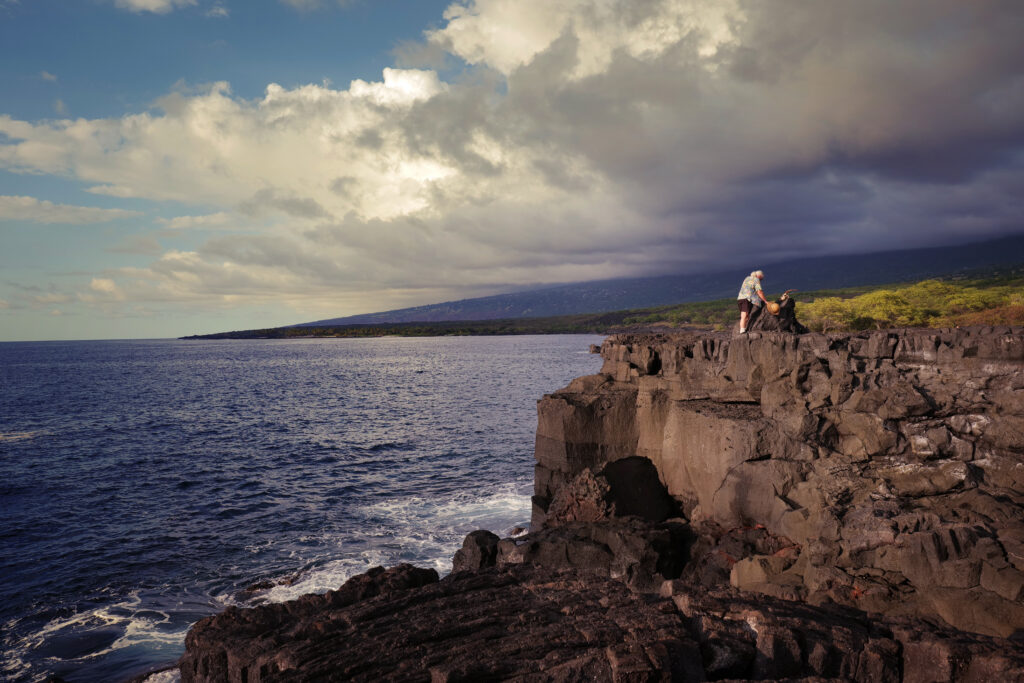
This work began not with a concept, but with a question that lived beneath language. Why do certain places feel charged— heavy with memory, thick with silence, trembling with story? Why does a forest clearing in Germany, a storm-lashed cave in Crete, or a tree in the Irish countryside stir something ancient in the body? What began as a photographic journey into the nature of faith — not institutional religion, but faith as presence — has become something deeper: a spiritual geography of Europe and beyond, tracing the ways in which myths, rituals, spirits, and natural sites are connected. Not just culturally, but emotionally. Psychically. Cosmologically. This project does not seek to explain myths, but to walk in their shadow. To photograph where myth echoes in landscape. To feel the way belief lingers in fog, stone, ash, and bark. My work began in Europe — places where stories live in soil. In Ireland, I sought the quiet remnants of the druids, their sacred trees and ancient stone circles still aligned with sun and moon. In Germany’s Harz region, where witches are said to dance on Walpurgis Night, I witnessed how ceremonial fire still burns through forest myths. In Finland, the aurora borealis arcs like a god’s breath above forests haunted by ravens and reindeer, echoing the dreamtime of Sámi cosmology. In Crete, I climbed into caves where trapped mountain spirits are still offered bread, honey, and silence. Each of these places holds a different thread of the mythic, but all belong to the same tapestry — a world where humans, nature, and spirits are not separate. In Iceland, where elves are consulted before roads are built, I found the most pragmatic mysticism. There, nature is not background — it is alive, and must be negotiated with. In France’s Breton forests, I wandered near Merlin’s supposed grave, where moss grows like stories and time feels unsteady. In the Netherlands, I returned to ancient oak groves and sacred groves whispered of in local folklore — even in the quiet of home, the sacred can flicker through the trees. I have also traveled beyond Europe. In Hawaii, the volcanic lands speak a raw, living language — and in the chants of Hawaiian priests I heard echoes of the sacred found in Irish blessings or Finnish rune-singing. In Sierra Leone and Liberia, among the Poro secret societies, I witnessed rituals where dancing devils and ancestral masks reveal deep ties between the living and the invisible — not so different from the masked festivals in Basque Spain or Romania’s winter solstice rites. These journeys, across places and cultures, are not about collecting myths. They are about learning to see again — not with the eye alone, but with reverence. With humility. With wonder. Myth is not simply story — it is a way of being with the world. And photography, for me, is the act of entering that space between vision and presence — of letting the myth reveal itself.

SECTION II: FROM FAITH TO LANDSCAPE
My journey into this work began not with mythology, but with faith — or more precisely, with the embodied practices of belief. Years ago, I stood beneath the immense sky of West Africa, surrounded by ritual drums, sacred trees, and the dancing spirits of the Poro society. I witnessed a type of spirituality that pulsed through the body and land — raw, immediate, communal. It was unlike anything I had encountered in Western sanctuaries. There, faith was not something hidden inside books or walls. It was smoke, sweat, soil. It was alive. That experience shifted something in me. When I returned to Europe, the sacred felt distant — buried beneath concrete, forgotten stories, and empty churches. But I began to look more closely. To listen. To feel. What I found was this: the sacred had not disappeared — it had gone underground, or it had dissolved into landscape. In the forests of Ireland, I found stones still humming with presence. In Iceland, I met people who still leave offerings for hidden folk. In Finland, the land itself is a liturgy, layered with Sami songs and Norse myths. And in Greece — where myth and philosophy once walked hand in hand — I wandered into ancient amphitheaters and mountain caves that still held the echo of gods. These were not religious experiences in the institutional sense — but they were deeply faithful encounters. So I shifted the direction of my project. It was no longer about “faith” in the sense of organized religion — it became a study of what remains when the rituals fade. Of what the land remembers. Of how myth and meaning leak into the natural world, even centuries after the gods have gone. I began to trace a new line: from West Africa to the Basque Country. From Greek temples to the forests of Dartmoor. From the holy volcanoes of Hawaii to the haunted groves of Germany. A map was emerging — not of place, but of resonance. I called it many things: The Faith Project, Sacred Sites, Mythic Echoes, Mystic Landscapes. None of them fully held it. Because this work is not about one belief, or even belief itself — it is about presence. About that invisible moment when a place shifts, and you feel something watching, or whispering, or waiting. Photography became the perfect tool. It is slow. It is silent. It demands reverence. And it allows you to catch things that words cannot name. I do not arrive at these places with a plan. I walk, I wait, and I listen. Sometimes nothing happens. Sometimes everything does. A fog moves. A shadow flickers. A light falls in such a way that the ordinary transforms into the mythic real. These are the moments I seek — and they rarely announce themselves. You must be open, soft, slow enough to see.

SECTION III: WHAT IS A SACRED SITE?
Some places ask us to stop. Not because they are famous, marked, or built — but because something in the air shifts, or the light falls in a certain way, or we sense a kind of hush. These places do not speak loudly. They breathe. They echo. We call them sacred sites, but what we truly mean is this: places where the border between worlds feels thin. Where story and soil, past and present, matter and spirit, become one. These are not always marked with signs or monuments. Some are ancient temples or forest altars; others are humble trees, wells, or stones. Some are known through legend, others through silence. And many — as I have come to learn — still remember, even if we have forgotten. To call something sacred is not just to give it meaning. It is to admit that it has meaning already, before us, beyond us. That we are entering something larger than our understanding — something that does not belong to us, but to time, to spirit, to memory itself. In Finland, the old word pyhä still carries this weight — a place of pause, of boundary. A sacred space is a border where we are asked to step back, breathe, and feel. It is not owned, it is not explained — it simply is. When I photograph sacred sites, I do not seek the visible structure — I search for the tremble beneath it. The way light touches moss. The pattern of stones that suggests an offering. A path that suddenly feels watched. I’ve stood in groves in the Netherlands where ancient trees lean like old gods. In Crete, inside caves where offerings are still left for mountain spirits. In Dartmoor, where mist curls around the granite tors like ancestral breath. These places don’t scream — they call. A sacred site is a form of memory. It is a myth held in matter. It is the residue of belief, of ritual, of presence. It does not require us to believe, only to be open. These sites are part of a global spiritual grammar — they may speak different languages (Celtic, Greek, Norse, African, Basque), but they say the same thing: There is more here than you can see. The land is alive. Pay attention. They are, in a way, the earliest cathedrals — long before walls, altars, or books. They are built from stone and silence, from wind and water. They are holy not because we made them so, but because we recognized what was already there. In the modern world — fractured, accelerated, uprooted — the need for sacred places has not disappeared. If anything, it has grown. We need spaces where no commerce can enter, where the soul can rest, where we can feel small and connected again. Sacred sites offer a counterpoint to consumption, distraction, and noise. They ask us to return to the primordial language of wonder. And so I travel, not to document, but to reconnect.

SECTION IV: PHOTOGRAPHING THE INVISIBLE
Photography, for me, is not the act of capturing a scene. It is the act of entering a presence. When I walk into a sacred space — whether it’s a mountain path in Crete, a basalt cave in Iceland, or a silent shrine in Japan — I don’t bring a plan. I bring reverence. I wait, I walk, I sometimes do nothing at all. And then, something stirs. A shift in light. A shape. A breath. An absence that feels full. These are the moments I photograph. Not the moment of recognition, but the moment of invocation. Many of my images contain little visual spectacle. Sometimes it’s a tree. A path. A sliver of light on stone. But if you look, and if you feel, something else appears: an emotional residue. A haunting. A sense that the image is not showing you everything — and that what it conceals is as important as what it reveals. This is not documentary. It is not staged. It is not even symbolic. It is intuitive photography — grounded in feeling, ritual, atmosphere.
Not representing a myth, but opening a doorway to it. I work square — not for balance, but for tension. The square holds the image like a shrine — symmetrical, yet deep. It asks the eye to stay still. To contemplate. It creates a meditative space where the photograph becomes less about what is inside the frame, and more about what it opens inside you. Sharpness is not my goal. Precision, in the technical sense, rarely helps me. What I look for is a sense of resonance — a vibration in the image that suggests more than the sum of light and form. This is why I often return to medium format systems, or cameras with character, with presence — they offer space for slowness, for spirit, for surrender. Sometimes the photograph surprises me — as if something used me to appear. Those are the moments I trust most. The ones I cannot plan. Because in this work, I am not the author. I am the observer. The visitor. The one who pauses, listens, and waits for what wants to show itself. Photography becomes, in this way, a spiritual practice — not of control, but of attention. A way to touch what cannot be touched. A silent collaboration between camera, land, and something else entirely.
SECTION V: Tales of Moonlight and Rain
A journey into Japan, where the sacred breathes in fog and form
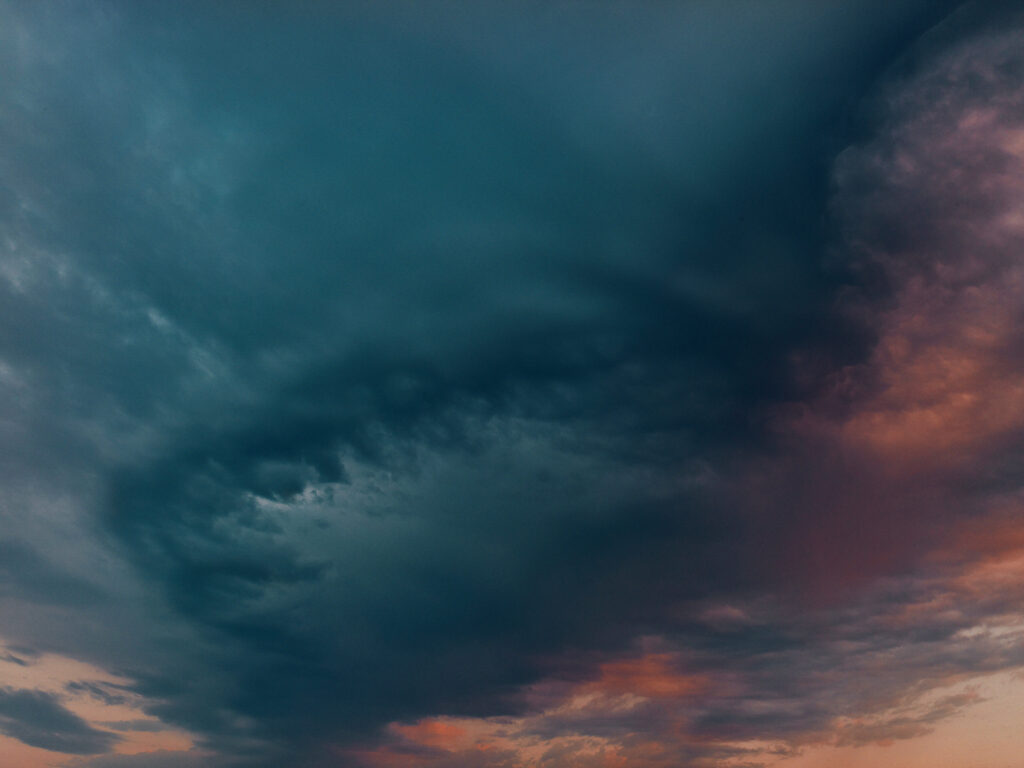
Some places do not reveal themselves. They wait. Quietly. Patiently. For the right presence. Japan is such a place. A country where spirit and nature are not separated by thought or theory — but where their union is simply understood. Where even the smallest shrine, nestled beside a vending machine or beneath a cedar tree, holds a vast interior sky. Here, myth is not a past story. It is the atmosphere itself. The journey to Japan is not a new direction in this project — it is a culmination. A deepening. For years, I have wandered Europe’s sacred sites, seeking the spaces where belief has lingered in stones, forests, rituals. I’ve walked the hidden paths of Iceland, the deep caves of Crete, the fire-lit forests of Germany and Ireland. But Japan presents something different. Something more elusive. More distilled. More disappearing. This series — inspired by the 18th-century Japanese book Tales of Moonlight and Rain — does not seek to illustrate those stories, but to move in their rhythm. To echo their tone. To follow their mist-trails across water and into the woods. These tales — ghostly, romantic, tragic, and sublime — are born from a worldview where the supernatural is natural, where spirits emerge from longing, loss, reverence, or forgotten promises. The moon is not just a motif — it is a mirror. And the rain is not weather — it is a veil, through which something other can be glimpsed. This is what I seek to photograph: Not ghosts, but the space they might emerge from. Not legends, but the light that suggests they may still walk among us. Not ritual, but the absence it leaves in the air when it ends. I walk through temple forests, over stepping stones, beside rice paddies filled with the sky. I follow shrines into silence. I see reflections of trees in water — and something else, layered underneath. The camera becomes not a recorder, but a shrine. An altar to possibility. To reverence. To the space between worlds. In Japan, the sacred does not announce itself. It waits to be noticed. And when it is, it responds — with a shiver in the bamboo, a curve in the mist, a glint of moonlight on a torii gate. These images are not of Japan, but with Japan. They are not about tales of ghosts and gods — they are attempts to photograph the breath between the stories. And as with all sacred work, the journey is not toward explanation — It is toward presence. Toward the quiet echo beneath the surface. Toward the place where rain falls through moonlight, and you can’t tell what’s dream, what’s real — only that you have entered something ancient and necessary.
SECTION VI: Why This Work Matters Now
A contemporary reflection and invitation to the reader
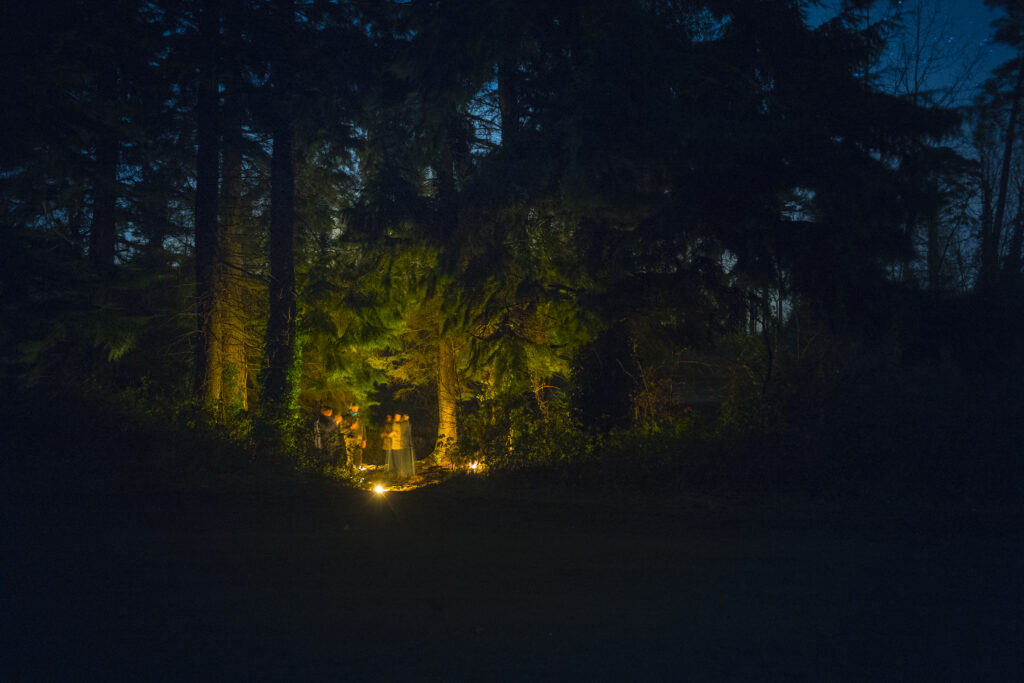
In this moment of human history, when the world feels increasingly fractured — ecologically, spiritually, culturally — the sacred has not disappeared. But its place has changed. It no longer lives only in temples or books. It now flickers in the edges. In forests. In forgotten rituals. In stories whispered across generations. And in the quiet gestures that remain — lighting a candle, walking barefoot on moss, touching stone with a kind of memory in the fingers. This project is not about belief systems. It is about what happens when we pause, and listen for what remains when belief dissolves. To make these photographs is not to document a tradition. It is to recognize that there are places where something older than the present still speaks. And more than that: it invites us to listen. Not passively, but participatorily. In myth, we find clues for being human — not in a literal sense, but as spiritual architecture. They teach us about transformation, humility, wildness, balance, shadow, and silence. And perhaps most importantly, about our relationship to place. Because when we forget the sacred, we lose more than meaning. We lose our connection to the land, to ancestry, to continuity, to awe. Through this work — these images, these journeys, these stories — I am not offering answers. I am offering presence. A return to the body. To the breath. To the image as an act of reverence. I hope these photographs are not seen as illustrations, but as thresholds — small openings through which something older, stranger, and more necessary can enter. Something we’ve lost, perhaps. Or something we’ve simply forgotten how to name. This is why the work matters. Because to photograph the sacred is not to look back — it is to ask what we need now, to move forward with integrity, humility, and a renewed sense of wonder. We must remember what it means to bow. To stand before a grove, or a storm, or a story — and know we are not alone.
THE ECHO OF THE MYTH

Title: Druid Altar
Hand printed Glicee print on Museum Etching paper
1 x Edition 80×80 signed
3 x Edition 50×50 signed
Ireland “A mysterious stone emerges from the mist near Moll’s Gap and Lough Brin, its ancient druidic carvings hidden until the light of the equinox reveals their secrets.”
Title: Samhain nights
Hand printed Glicee print on Museum Etching paper
1 x Edition 60×60 signed
2 x Edition 50×50 signed
Ireland “Night of Samhain at Tlachta, also known as Hill of Ward. In Irish mythology, Samhain is a time when the ‘doorways’ to the Otherworld open, allowing supernatural beings and the souls of the dead to come into our world.“

Title: Dionysian Mysteries
Hand printed Glicee print on Museum Etching paper
1 x Edition 80×80 signed
2 x Edition 50×50 signed
Greece “Dionysian Mysteries in the Dionysan temple site near mount Olypus on the night of it’s official celebrations.“

Title: Witches Fire
Hand printed Glicee print on Museum Etching paper
1 x Edition 80×80 signed
2 x Edition 50×50 signed
Germany “Sparkles from a Walpurgis witches fire fly up in the sky in the Hartz mountains. The night of Walpurgis is known as the night of the witches and still celebrated in Germany and many other northern European countries with a fire ritual and other ceremonies.“

Title: Centaurs mountain
Hand printed Glicee print on Museum Etching paper
1 x Edition 80×80 signed
2 x Edition 50×50 signed
Greece “Mountain of Pilion is known as the birthplace of centaurs and with the caves and wild terrain their realm. These steep mountain ranges and dense forrest are intertwined with the centaurs myths and stories.“
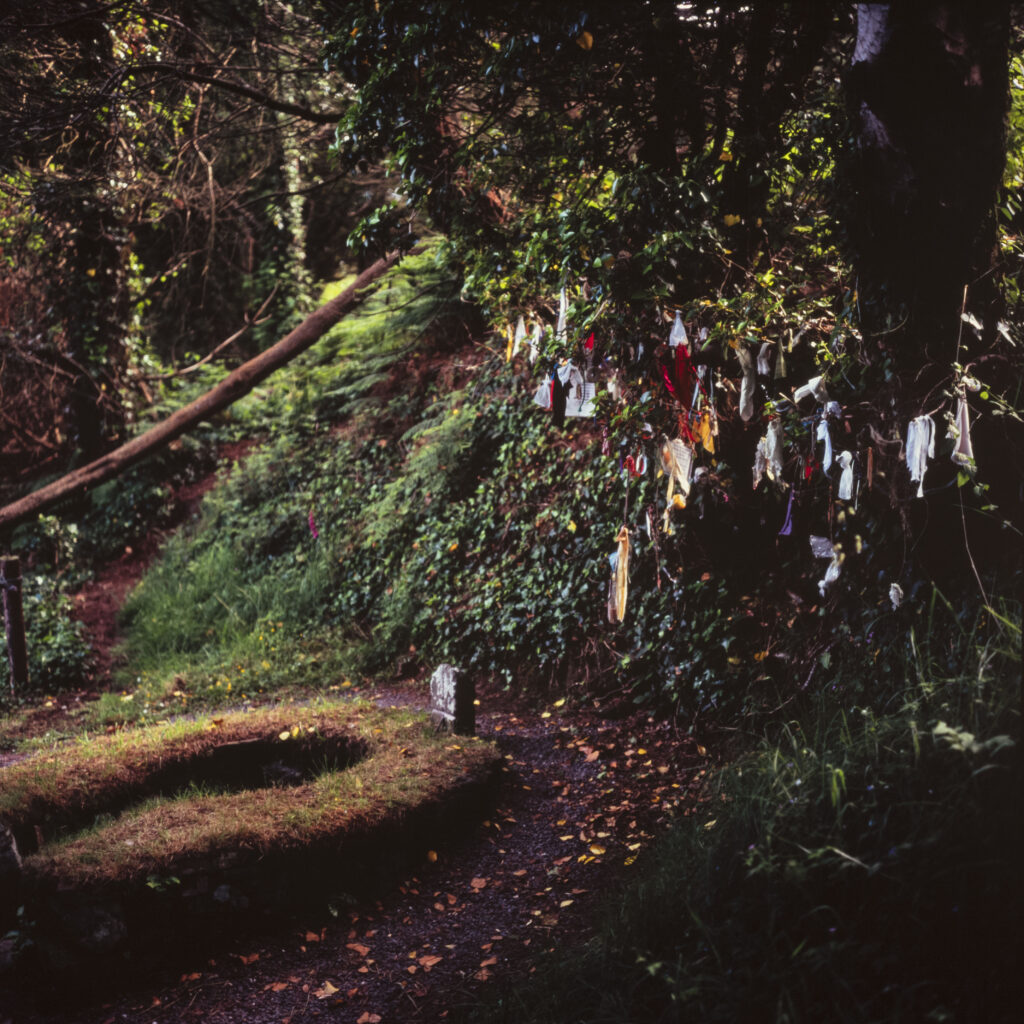
Title: Sacred Waters
Hand printed Glicee print on Museum Etching paper
1 x Edition 80×80 signed
2 x Edition 50×50 signed
Ireland “The holy well in Ireland itself was viewed upon as a shrine dedicated to the miraculous emergence of living water, in all cultures a symbol of generation, purification, and the matrix of life itself. Rag Trees are another indication of the Druidic origin of Ireland it’s sacred wells.“

Title: Isis Sunken Sanctuary
Hand printed Glicee print on Museum Etching paper
1 x Edition 80×80 signed
2 x Edition 50×50 signed
Ireland “Isis is a goddess from the polytheistic pantheon of Egypt. She was first worshiped in ancient Egyptian religion, and later her worship spread throughout the greater Greco-Roman world. Her sunken sanctuary, inside Dion city built at the foot of Mount Olympus.“

Title: Odins Jakt
Hand printed Glicee print on Museum Etching paper
1 x Edition 80×80 signed
2 x Edition 50×50 signed
the Netherlands “Ösgardsreien, Wild Hunt or Odins Jakt is a myth that depics souls riding the skies and bring trouble and death while raving through the sky.“

Title: Huldufólk Elfs
Hand printed Glicee print on Museum Etching paper
1 x Edition 80×80 signed
2 x Edition 50×50 signed
the Netherlands “Huldufólk, the hidden people in Icelandic are also known as elf rocks. Stories of encounters are still very present in Icelandic society and they believed to live in a parallel universe but can show themselves sometimes into our world.“